Flooring
information.
Two ways to get
native timber flooring.
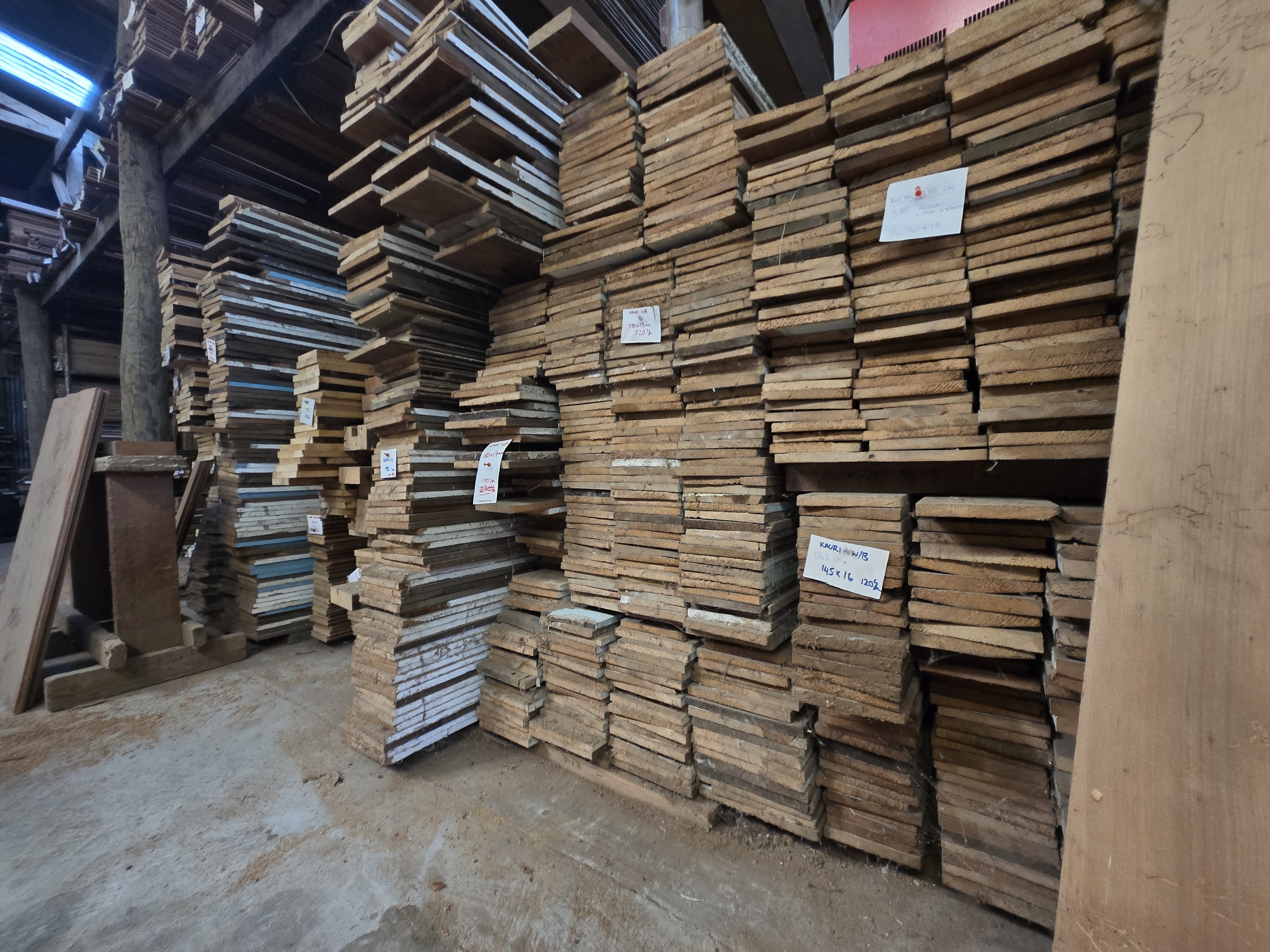
All of our timber comes from Auckland demolitions — carefully recovered, de-nailed, graded, and brought back to the yard in Titirangi. From there, it either goes through the machines and becomes remachined flooring, or it is cleaned up and supplied as salvaged original boards.
Both options have their place. Which one is right for you depends on what you are trying to achieve.
Remachined
flooring.
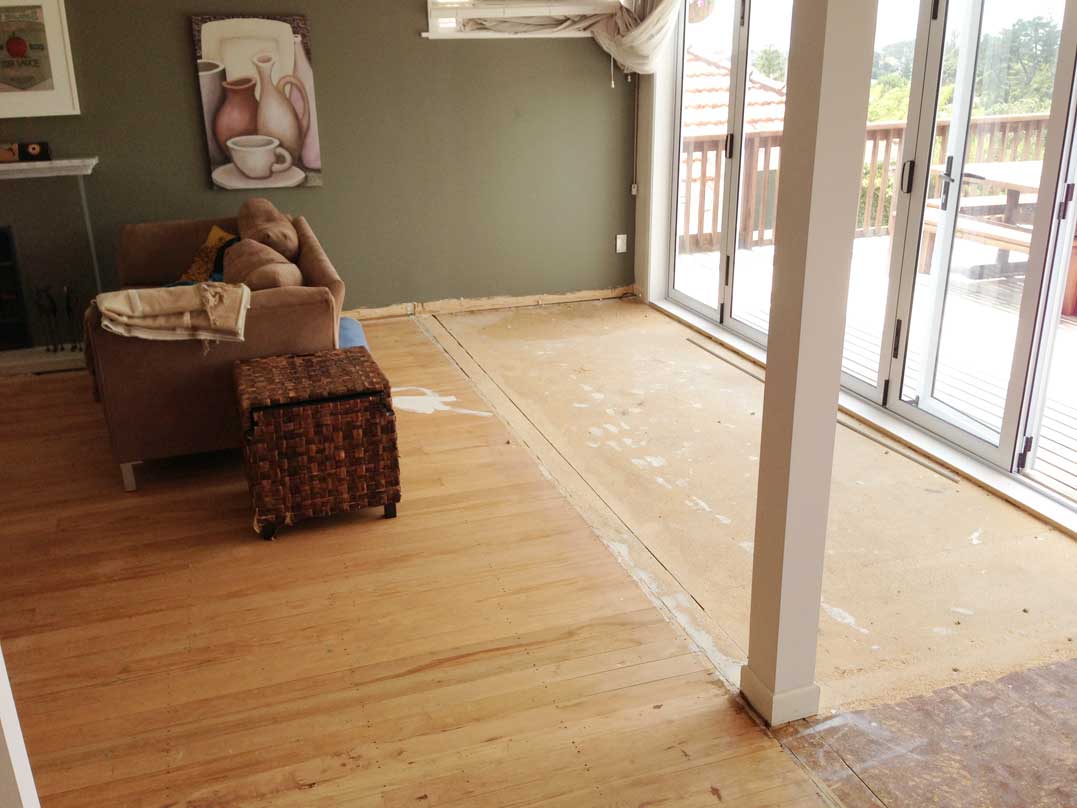
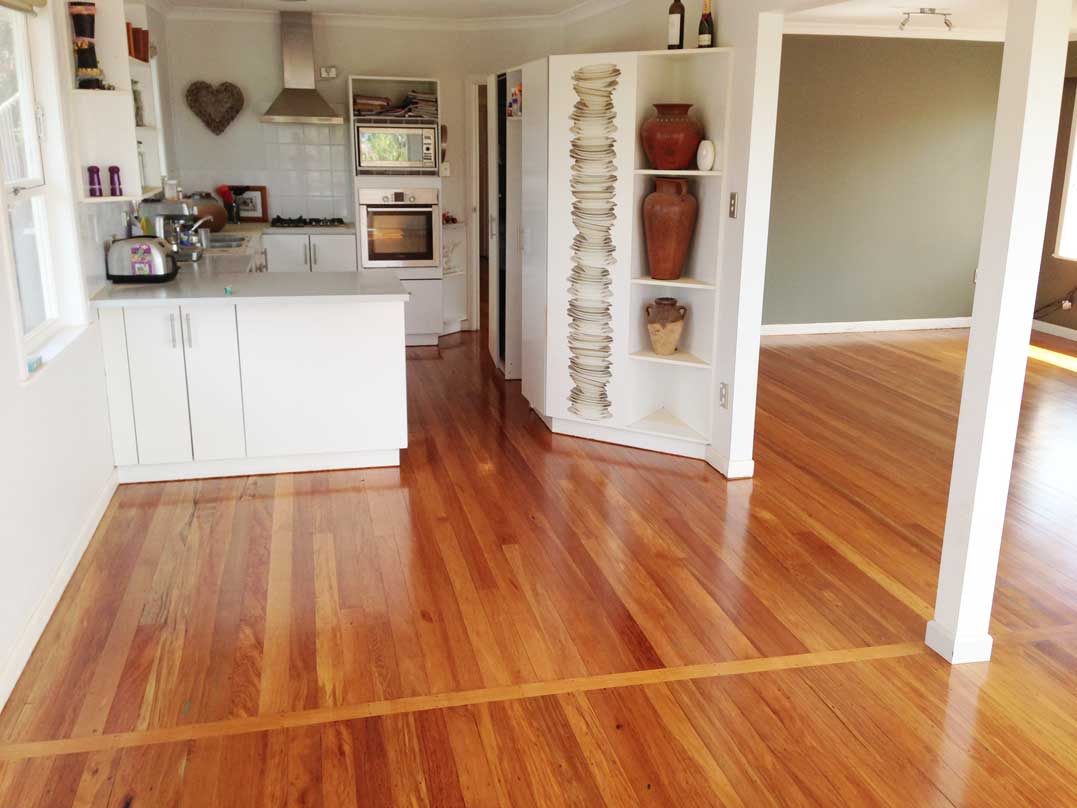
Recovered timber that has been run through the machines at the Titirangi yard to produce straight, consistent flooring boards. All machining is done on site — so if you need a width to match an existing floor, we can do that. The result is boards that fit together tightly, require just a light sand, and lay like new timber.
Increasingly popular in new builds where owners want the character and warmth of native timber but need the consistency of modern machining. We always have strong stock of Rimu. Matai and Kauri are available — for larger quantities, some lead time may be required.
Choose the profile
that fits your situation.
All three options are available in widths from 60mm to 150mm. The right choice depends on whether you are laying over joists, over an existing subfloor, or working with limited height clearance.
Widths from 60mm to 150mm. Tongue and groove profile. The standard for structural flooring over joists — and a cost-effective option for overlays onto concrete where extra depth is not a concern.
Widths from 60mm to 150mm. Tongue and groove profile. Used over particle board, plywood, or concrete — normally glued and secret nailed. Popular for replacing tired carpet with solid timber.
Widths from 60mm to 150mm. No tongue and groove — dressed four sides. Used the same way as the 12mm overlay, ideal when door clearances are tight or you are patching and matching sections of floor.
Salvaged original
floorboards.
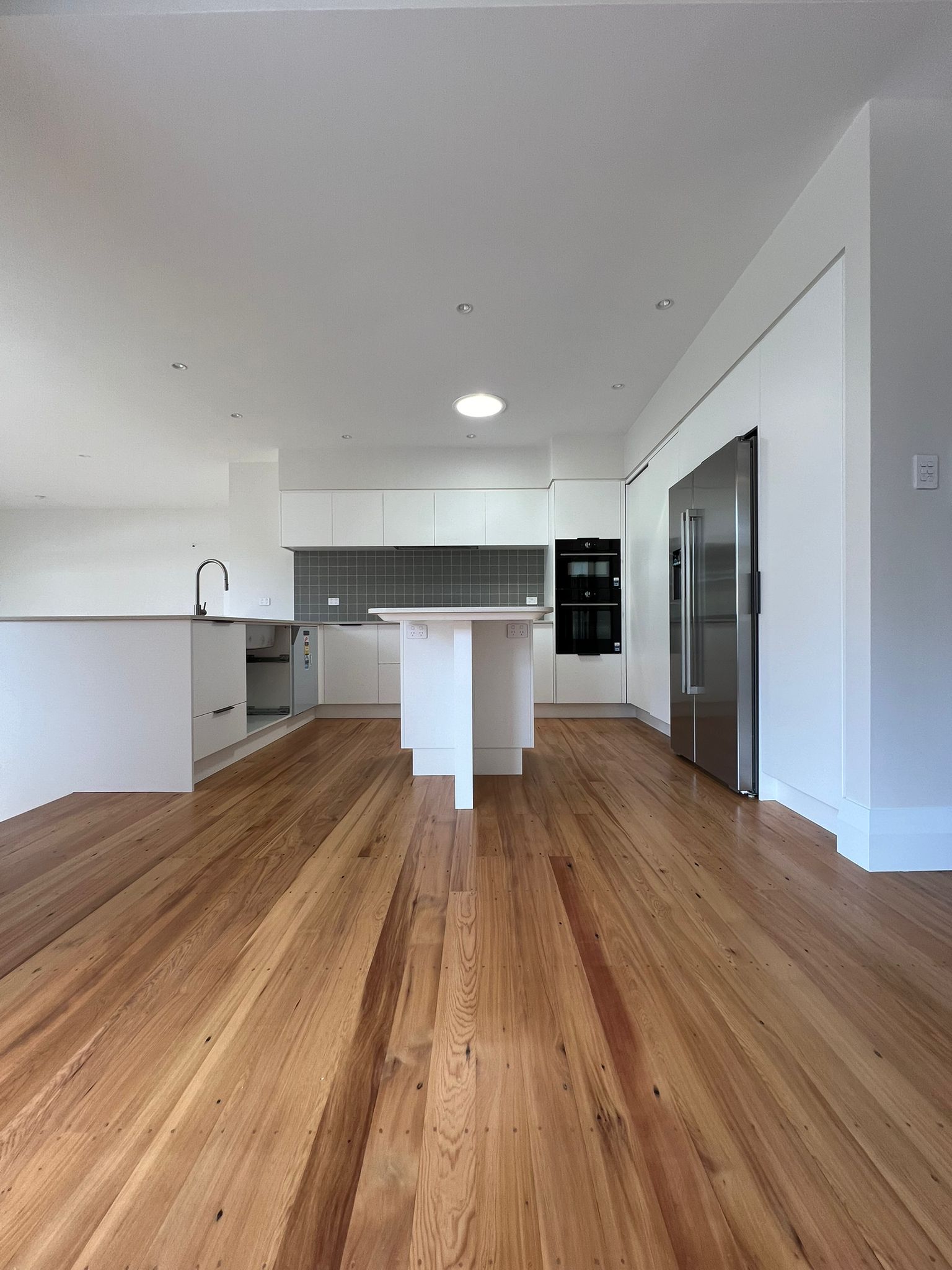
Boards carefully lifted from demolished buildings, de-nailed, docked, and checked for quality. These are supplied as original boards — laid as-is and then sanded on site. They will have original nail holes and more character variation than remachined stock. More rustic, more raw.
Generally used for repairs to existing floors and extension or renovation work where matching the character of the original floor matters more than uniformity. We always have good stock of most species.
In the old days, flooring was measured in imperial. Salvaged original boards still come in three basic widths — here is what those old measurements actually mean:
Ready to talk
about your floor?
Not sure what species, what profile, or how much you need? David will tell you straight — no jargon, no runaround.
Use our online form.
Provide your job details and species interest on our dedicated contact page and David will get back to you with a quote.
Get a Quote